Low Testosterone and TRT

Low testosterone levels can result in both physical and psychological health concerns. Testosterone Replacement Therapy could help restore your performance.

Take the Low Testosterone Test
Imran Khan discusses the issues of low testosterone and how TRT may help some men.

“Low testosterone can significantly impact your life, affecting both athletic ability and relationships. Start by assessing your levels to see if Testosterone Replacement Therapy (TRT) can help restore your energy and improve your well-being.”

Imran Khan, TransformNow Founder

Low Testosterone Test

Complete the test to see if you have low testosterone symptoms and if Testosterone Replacement Therapy could help you.

Causes, symptoms, and treatment of low testosterone

Signs and symptoms of low testosterone

Testosterone Deficiency has well-established symptoms. The 4th International Consultation for Sexual Medicine (ICSM) made the following recommendations for the clinical diagnosis of TD based on the following signs and symptoms:

  • Sexual dysfunction, especially low sexual desire, decreased morning and night-time erections, and Erectile Dysfunction (ED) are prominent, commonly presenting symptoms particularly suggestive of TD when associated with each other
  • Less specific symptoms such as fatigue, sleep disturbance, loss of physical strength, decreased energy and motivation, and depressed mood is often present.
  • Visceral obesity and decreases in muscle mass and bone mineral density are commonly observed.
  • Hot flushes and changes in cognition and memory can be associated with TD.
  • On physical examination, features suggestive of TD include decreased body hair, decreased testicular size, and gynecomastia, but these are not always present. Fine wrinkling of the skin, especially around the mouth, can also be apparent.

Clinical signs and symptoms suggestive of testosterone deficiency*

Sexual

  • Delayed puberty
  • Small testes
  • Ifertility
  • Reduced sexual desire and activity
  • Reduced frequency of sexual thoughts
  • Erectile dysfunction
  • Delayed ejaculation
  • Reduced volume of ejaculate
  • Reduced or absent morning or night-time erections

Cardiometabolic

  • Increased body-mass index (BMI) or obesity
  • Visceral obesity
  • Metabolic syndrome
  • Insulin resistance and type 2 diabetes mellitus (T2DM)

Physical

  • Reduced body hair
  • Gynecomastia
  • Reduced muscle mass and strength
  • Hot flushes or sweats
  • Sleep disturbances
  • Fatigue
  • Osteoporosis, height loss, low trauma fractures

Psychological

  • Changes in mood (e.g., anger, irritability, sadness, depression)
  • Reduced well-being or poor self-rated health
  • Reduced cognitive function (including impaired concentration, verbal memory, and spatial performance)

* Testosterone deficiency is often associated with increased waist circumference, obesity, metabolic syndrome, and impaired health status. In a primary care population of men at least 45 years, the reported odds ratios for testosterone deficiency with comorbid conditions were:

  • 2.38 for obesity
  • 2.09 for T2DM
  • 1.84 for hypertension
  • 1.47 for dyslipidemia
  • 1.40 for chronic obstructive pulmonary disease
  • 1.20 for lower urinary tract symptoms related to benign prostatic hyperplasia.

Significant testosterone deficiency is associated with an increased risk of chronic anaemia and osteoporosis.

There are a number of factors that can result in low testosterone. 

These include:

  • Lack of sleep – many studies have shown that bad sleeping habits, as well as poor sleep, can not only reduce testosterone levels in both young and old men but also that bad sleep patterns or sleep disorders may be an indication of low testosterone (Wittert, 2014)
  • Lack of exercise – inactivity and obesity are obvious factors.
  • Obesity – countless studies have shown that obesity and obesity-related diseases reduce testosterone levels.
  • Certain foods, especially soya-based foods – this has always been a controversial issue with some researchers claiming soya-based foods have no link to fertility and testosterone levels. However, an increasing body of research suggests the opposite. Certainly, anecdotal evidence would suggest soya decreases testosterone. Some studies such as Chavarro, Toth, Sadio and Hauser (2008) suggest that semen quality is reduced by the isoflavones in Soy food as well as a decrease in testosterone.
  • Smoking – many studies have found smokers have lower levels of testosterone and sperm counts. In contrast, other studies[18] have found no clear evidence. However, common sense would argue to reduce smoking or cut it altogether.
  • Marijuana– countless studies have shown that Tetrahydrocannabinol (THC) and other chemicals affect testosterone production via the Leydig Cells in the testis. Other recent studies show the opposite – that marijuana may actually increase short-term testosterone serum levels, but may reduce sperm levels.
  • Alcohol – A direct link between alcohol and low testosterone was established many years ago with alcohol affecting testosterone levels by affecting the Leydig cells in testis.
  • A lack of vitamins and minerals – Vitamin E, Zinc, Selenium, Folic acid and B vitamins can reduce the level of testosterone as well as sperm quality. Recently, evidence shows that low levels of vitamin D3 can also reduce libido and testosterone levels.

Prescription medications can lower testosterone levels

  • Cimetidine (Tagamet) is often prescribed to people with ulcers or gastroesophageal reflux disease (GERD). It’s also available in an over-the-counter form to treat heartburn. It comes in tablet and liquid forms.
  • Spironolactone (Aldactone) may be used with other medicines to treat high blood pressure and heart failure. It may also help people who have too much aldosterone, a hormone, or people who have oedema (fluid retention) from heart, liver, or kidney disease.
  • Certain antidepressants may lower testosterone levels. A doctor can advise a patient on which antidepressant is most suitable.
  • Chemotherapy drugs have been shown to lower testosterone levels, possibly because they can damage the testes – the organs that produce testosterone in men.
  • Recent studies have also shed some light on other drugs effects on testosterone:
  • Opioids are pain relievers like morphine, codeine, hydrocodone (Vicodin), and oxycodone (OxyContin, Percocet).
  • Anti-inflammatory medicine. Opioids are also classified as short-acting or long-acting. Short-acting opioids release medication quickly and are usually taken every four to six hours. In contrast, long-acting opioids release medication slowly and are generally taken every eight to twelve hours.

Testosterone Replacement Therapy (TRT) and is often marketed as an anti-ageing therapy or male hormone therapy. Essentially, it is a case of giving testosterone to men to reduce the symptoms of testosterone deficiency.

How does TRT work?

TRT supplements the body with external testosterone, which can be administered through various delivery methods. Once introduced into the body, testosterone helps regulate several physiological processes, including muscle growth, mood regulation, and sexual function. Regular monitoring through blood tests is essential to ensure levels remain within the desired range while minimizing potential side effects.

Pros and cons of delivery methods

Gels and creams

Pros:

  • Easy to apply daily and adjust dosage as needed.
  • Provides stable testosterone levels throughout the day.
  • Less invasive compared to injections.

Cons:

  • Absorption can vary based on skin type and application technique.
  • Risk of transferring the hormone to others through skin contact if not applied properly.

Injections

Pros:

  • Allow for larger doses to be administered, making them effective for those needing significant hormone replacement.
  • Longer-lasting effects, typically given every two to four weeks.

Cons:

  • Can be painful and inconvenient due to the need for regular appointments.
  • Possible fluctuations in testosterone levels between injections, leading to peaks and troughs in mood and energy.

Patches

Pros:

  • Provide a consistent release of testosterone over 24 hours.
  • Convenient and easy to use, with less frequent application compared to gels.

Cons:

  • Skin irritation may occur at the application site.
  • Can be more expensive than other methods, and may fall off during physical activity.

While Testosterone Replacement Therapy can significantly enhance quality of life for those with low testosterone levels, it’s important to weigh the benefits and drawbacks of each delivery method to find the best fit for individual needs.

Speak to our team to navigate these options effectively, or order our Advanced TRT Health & Wellness Performance Profile blood test now.

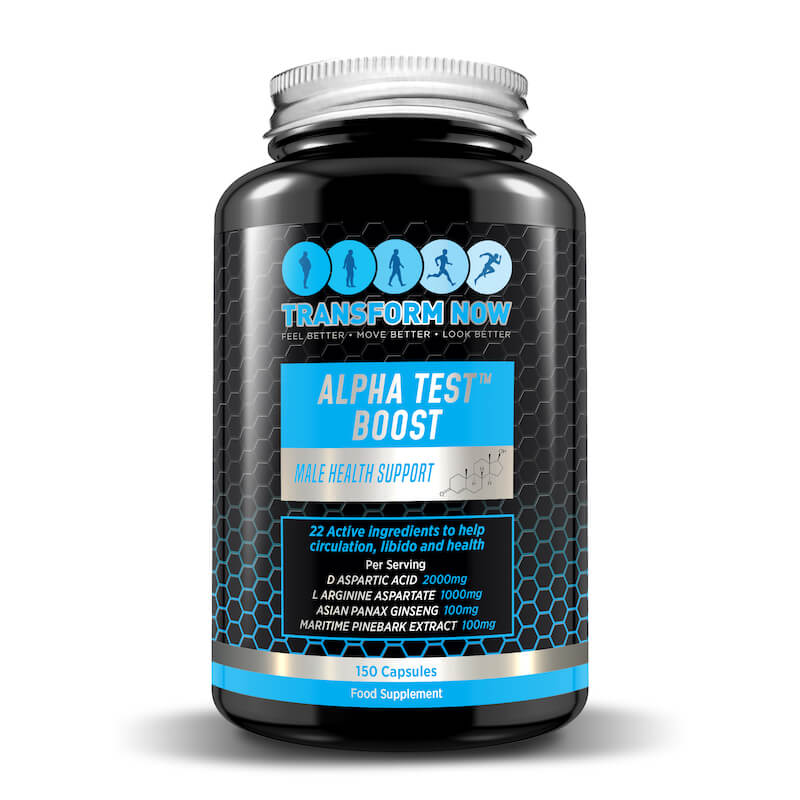
Lifestyle changes are key to improving your testosterone levels.  Both exercise and diet can have a positive impact.  As well as TRT you can compliment your lifestyle changes with supplements designed to boost your levels.

Alpha Test Boost from TransformNow has been painstakingly developed with the aid of medical, academic and sports professionals to help you restore your levels faster, naturally.

Discover your levels and how they’re impacting you

  • We call you to tell you what the results mean in plain English and teach you about changes that could improve your health and performance.
  • We provide a one-to-one service and alert you about follow-up assessments, treatment from independent CQC-registered providers, and lifestyle advice on a regular basis.
  • Our ongoing research into sports and performance optimisation is translated into real plans. No pseudo-science, just fitter, stronger clients at the top of their game!
Order the Advanced TRT Health & Wellness Performance Profile
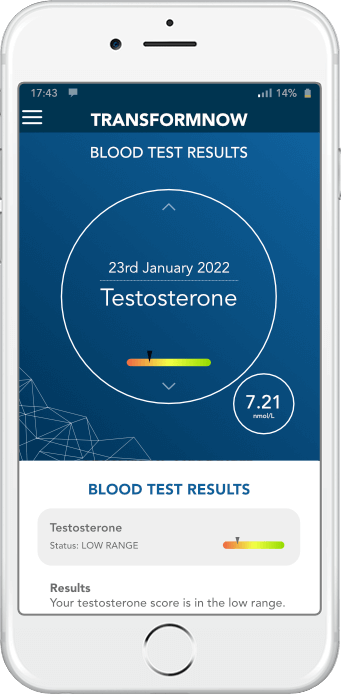
Understand the signs of low testosterone with low testosterone test results displayed on our app.

Get results that change your life

Every testosterone conversation starts with you learning how you are now and what you’re trying to achieve – that’s how you get results that matter.

Take control of your health - join the revolution!